
DEFCO
Desert Fence Company
There are three critical criteria to consider when selecting chain link fence fabric: the diameter of the wire, the size of the mesh, and the type of protective coating.
The chain link’s wire diameter shows how much steel is actually in the fabric. A higher diameter indicates that the chain link is made of more steel and higher quality wire, directly correlating to its overall strength.
Common chain link diameters are 2.50, 3.00, 3.76, and 4.00 mm. It is recommended that a typical chain link fence use a 3.00 – 3.76 mm diameter. Light weight, temporary chain link fences can use 2.30 – 2.80 mm wire, while heavy, industrial fencing requires 3.76 and 4.00 mm diameters.
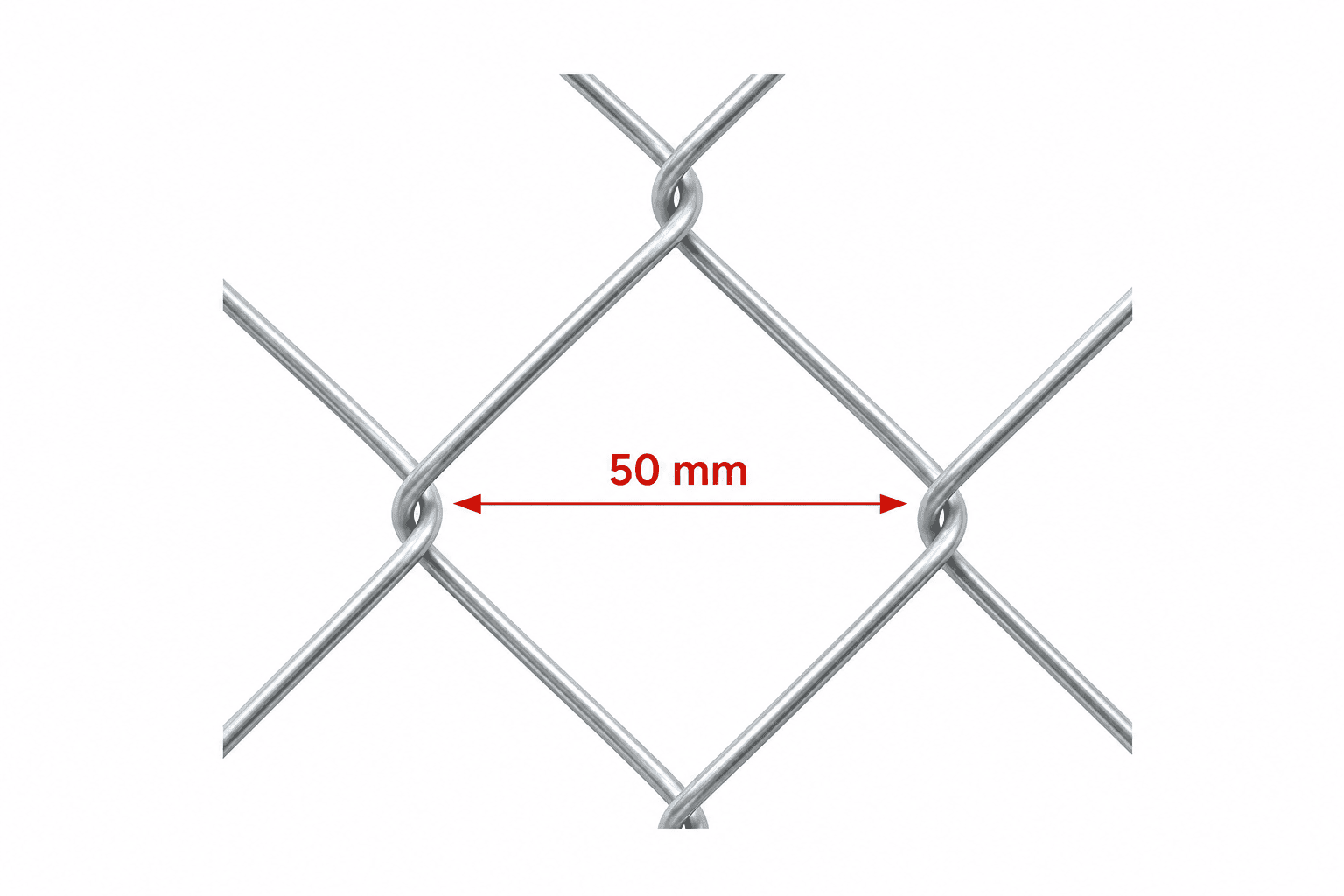
The chain link’s mesh size is a measurement of how far apart the parallel wires are in the mesh. Like the wire's diameter, the mesh size is another indication of how much steel is in the chain link. A smaller diamond means more steel is in the fabric.
Typical chain link mesh ranges in size from 50, 60, and 75 mm. Smaller chain link meshes of 25 mm are usually reserved for high-impact areas like tennis courts and swimming pools.
There are several different surface treatments that help protect and beautify steel chain-link fabric.
Zinc is the most common protective coating for chain link fences. Zinc protects the steel at all costs; for example, if the chain link is cut, the zinc "heals" the exposed steel surface and protects it from rust by developing a white oxidation layer. Typical galvanized chain link fabric has a 90-120 grams per square meter coating. A project requiring greater-than-average longevity may require a heavier zinc coating (up to 366 grams per square meter). The longevity of the fence is related to the amount of zinc applied.
If you want your chain link fence to have color, look for a polyvinyl chloride (PVC) coating applied over the zinc coating. The PVC provides a second layer of corrosion protection and helps the fence blend into its environment. Color coatings can be applied in three different ways: